
Explore
Physics Researchers
Browse 11 researchers focused on physics in consciousness research.
11 results found
Brian Josephson
Emeritus Professor of Physics · University of Cambridge
Nobel Prize-winning physicist (1973, for the Josephson effect) who has investigated the relationship between quantum mechanics and consciousness, including the role of mind in physical theory and paranormal phenomena.
Chris Fields
Independent Researcher · Independent (Allen Discovery Center affiliate)
Independent scientist working on the physics of observer-environment interaction, quantum information theory, and the relationship between physics and consciousness.
David Bohm
Professor of Theoretical Physics (posthumous) · Birkbeck College, University of London
Theoretical physicist who developed the implicate order framework and the holographic paradigm, proposing that consciousness and matter share a deeper undivided reality. His dialogues on thought and consciousness influenced both physics and philosophy of mind.

Donald Hoffman
Professor of Cognitive Sciences · UC Irvine
Cognitive scientist known for his Interface Theory of Perception, proposing that spacetime and objects are not fundamental but are species-specific interfaces.
Evan Harris Walker
Physicist (Posthumous) · US Army Ballistic Research Laboratory (formerly)
Physicist who proposed a quantum mechanical theory of consciousness and psi phenomena, linking consciousness to quantum tunneling in synaptic junctions. Deceased 2006.
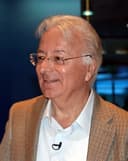
Federico Faggin
Physicist & Inventor · Faggin Foundation
Physicist, engineer, and inventor who developed the first commercial microprocessor (Intel 4004). Now focuses on the nature of consciousness through the Federico and Elvia Faggin Foundation.
Henry Stapp
Physicist (retired) · Lawrence Berkeley National Laboratory
Theoretical physicist who developed a quantum mechanical theory of consciousness based on the ideas of von Neumann and Heisenberg, arguing that quantum mechanics requires conscious observation as a fundamental element of physical theory.
Max Tegmark
Professor of Physics · Massachusetts Institute of Technology
Cosmologist and physicist who proposed the mathematical universe hypothesis and studies consciousness as a state of matter ("perceptronium"). Co-founder of the Future of Life Institute.
Roger Penrose
Emeritus Rouse Ball Professor of Mathematics · University of Oxford
Nobel Prize-winning mathematical physicist who proposed that consciousness arises from quantum processes in brain microtubules (Orchestrated Objective Reduction, with Hameroff). His work challenges computational theories of mind.
Sara Walker
Associate Professor of Physics · Arizona State University
Theoretical physicist and astrobiologist studying the origins of life and the physics of living systems. Her work on assembly theory connects information, chemistry, and the emergence of agency.
Tim Palmer
Royal Society Research Professor · University of Oxford
Physicist who proposed connections between chaotic dynamics, free will, and consciousness through his work on invariant set theory and the geometry of state space.