
Explore
Philosophy Researchers
Browse 33 researchers focused on philosophy in consciousness research.
33 results found
Alfred North Whitehead
Professor of Philosophy (posthumous) · Harvard University
Mathematician and philosopher who developed process philosophy, positing that reality consists of experiential events rather than inert matter. His panexperientialism is a major precursor to modern panpsychism in consciousness studies.
Alva Noë
Professor of Philosophy · University of California, Berkeley
Philosopher who champions the enactivist approach to perception and consciousness, arguing that consciousness is not something that happens inside the brain but is something we do through dynamic interaction with the world.
Amie Thomasson
Daniel P. Stone Professor of Philosophy · Dartmouth College
Philosopher known for her work on ontology, mind, and the philosophy of fiction. Expert on phenomenology and the metaphysics of ordinary objects in relation to consciousness.
Andy Clark
Professor of Cognitive Philosophy · University of Sussex
Philosopher and cognitive scientist known for the extended mind thesis and his work on predictive processing. He argues that cognition extends beyond the brain into the body and environment, reshaping how we understand conscious agents.
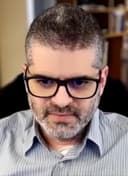
Bernardo Kastrup
Philosopher · Essentia Foundation
Philosopher known for his work on analytic idealism, arguing that consciousness is the fundamental nature of reality.
Daniel Dennett
Austin B. Fletcher Professor of Philosophy (Emeritus) · Tufts University
Philosopher who developed the multiple drafts model of consciousness and defended a deflationary, functionalist approach. Coined heterophenomenology as a third-person methodology for studying consciousness. Passed away in April 2024.
David Chalmers
University Professor of Philosophy and Neural Science · New York University
Philosopher and cognitive scientist who formulated the "hard problem of consciousness," distinguishing subjective experience from functional explanations. Co-director of the NYU Center for Mind, Brain, and Consciousness.
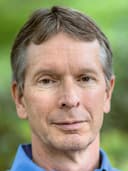
Donald Hoffman
Professor of Cognitive Sciences · UC Irvine
Cognitive scientist known for his Interface Theory of Perception, proposing that spacetime and objects are not fundamental but are species-specific interfaces.
Evan Thompson
Professor of Philosophy · University of British Columbia
Philosopher working at intersection of cognitive science, phenomenology, and Buddhist philosophy. Co-author of foundational "The Embodied Mind."
Francisco Varela
Research Director (posthumous) · CNRS / École Polytechnique
Chilean biologist, philosopher, and neuroscientist who co-developed the concept of autopoiesis and founded neurophenomenology, a research program integrating first-person contemplative experience with neuroscience. Passed away in 2001.
Hedda Mørch
Associate Professor of Philosophy · Inland Norway University of Applied Sciences
Philosopher working on the combination problem for panpsychism, addressing how micro-level consciousness combines into the unified macro-experience we know. Her work advances the strongest objection facing panpsychist theories.
Iain McGilchrist
Psychiatrist and Writer · Independent
Psychiatrist and literary scholar whose research on brain hemispheric differences argues that the left and right hemispheres attend to the world in fundamentally different ways, with profound implications for consciousness, culture, and civilization.
Jakob Hohwy
Professor of Philosophy · Monash University
Philosopher and cognitive scientist who applies the predictive processing framework to consciousness, arguing that the brain is fundamentally a prediction machine and that conscious experience arises from hierarchical Bayesian inference.
Jennifer Windt
Senior Lecturer in Philosophy · Monash University
Philosopher of mind specializing in dreaming, sleep, and altered states of consciousness. Her work bridges analytic philosophy with sleep neuroscience.
Jesse Prinz
Distinguished Professor of Philosophy · City University of New York (CUNY)
Philosopher who defends an intermediate-level representational theory of consciousness, arguing that consciousness resides in mid-level sensory representations (the attended intermediate representation theory, or AIR). His work spans consciousness, emotion, and aesthetics.
John Searle
Professor Emeritus of Philosophy · University of California, Berkeley
Philosopher who proposed the Chinese Room thought experiment against strong AI and developed biological naturalism, the view that consciousness is a biological phenomenon caused by neuronal processes in the brain.
Joscha Bach
AI Researcher · Independent (formerly MIT Media Lab)
Cognitive scientist and AI researcher who develops computational models of consciousness and cognition based on the MicroPsi framework. He bridges artificial intelligence, philosophy of mind, and cognitive architecture.
Keith Frankish
Honorary Professor of Philosophy · University of Sheffield
Philosopher who developed illusionism about phenomenal consciousness, arguing that qualia as traditionally conceived are illusory and that what we call phenomenal consciousness is a misrepresentation by introspection.
Kristin Andrews
York Research Chair in Animal Minds · York University
Philosopher specializing in animal minds, animal cognition, and the moral status of animals. York Research Chair in Animal Minds. Co-authored the New York Declaration on Animal Consciousness (2024).
Ned Block
Silver Professor of Philosophy, Psychology, and Neural Science · New York University
Philosopher who introduced the influential distinction between access consciousness and phenomenal consciousness. Co-director of the NYU Center for Mind, Brain, and Consciousness, his work shapes debates on the nature and measurement of conscious experience.
Patricia Churchland
Professor Emerita of Philosophy · University of California, San Diego
Neurophilosopher who pioneered the intersection of philosophy and neuroscience, arguing that traditional folk-psychological concepts of mind may be replaced by neuroscientific understanding. A leading figure in eliminative materialism.
Philip Goff
Professor of Philosophy · Durham University
Philosopher and leading advocate of panpsychism who argues that consciousness is a fundamental and ubiquitous feature of matter. His book Galileo's Error makes the case that science took a wrong turn by excluding consciousness from its purview.
Raphaël Millière
Assistant Professor of Philosophy · Macquarie University (formerly Columbia)
Philosopher and cognitive scientist studying self-consciousness, ego dissolution, altered states, and the relationship between psychedelics and selfhood. Bridges AI and consciousness research.
Riccardo Manzotti
Professor of Theoretical Philosophy · IULM University Milan
Philosopher and AI researcher who developed the Spread Mind theory, proposing that consciousness is identical with the object one experiences rather than being a neural process inside the head.
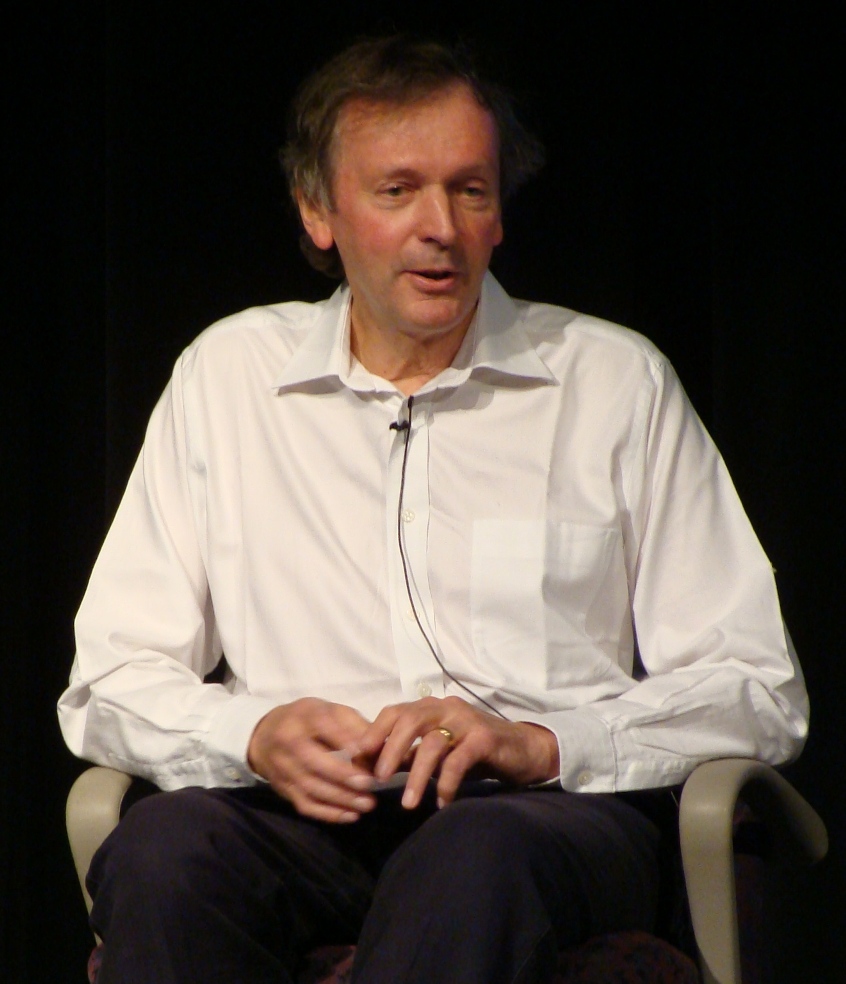
Rupert Sheldrake
Biologist & Author · Independent
Biologist and author known for his hypothesis of morphic resonance and research into phenomena such as telepathy.
Susan Blackmore
Visiting Professor · University of Plymouth (Independent)
Psychologist and independent researcher known for her work on memetics, consciousness, and Zen practice. Her "illusory self" perspective integrates cognitive science with contemplative insights about the nature of awareness.
Susan Schneider
Distinguished Scholar · Florida Atlantic University / Library of Congress (former)
Philosopher and AI researcher studying machine consciousness, the hard problem, and the nature of the self. Former NASA Chair in astrobiology.
Thomas Metzinger
Professor of Philosophy · Johannes Gutenberg University Mainz
Philosopher known for his work on the self-model theory of subjectivity (SMT) and embodied cognition. Former co-chair of German Ethics Council AI Working Group.
Thomas Nagel
University Professor Emeritus of Philosophy and Law · New York University
Philosopher who authored the seminal 1974 paper "What Is It Like to Be a Bat?" arguing that subjective experience cannot be reduced to physical processes. His work remains a cornerstone of the consciousness debate.
Tim Bayne
Professor of Philosophy · Monash University
Philosopher of mind researching the unity of consciousness, theories of consciousness, and disorders of consciousness. His work examines how the many aspects of conscious experience are bound together into a unified whole.
Uriah Kriegel
Professor of Philosophy · Rice University
Philosopher who developed the self-representational theory of consciousness, arguing that a mental state is conscious when it represents itself. His work connects phenomenal consciousness to intentionality and self-awareness.
Wanja Wiese
Postdoctoral Researcher · Ruhr University Bochum
Philosopher working on predictive processing theories of consciousness, the relationship between models of perception and subjective experience, and the philosophy of AI consciousness.
William James
Professor of Psychology and Philosophy (posthumous) · Harvard University
Pioneering American psychologist and philosopher who developed the concept of the stream of consciousness and radical empiricism. Often considered the father of American psychology, his work on consciousness, mystical experience, and pragmatism remains foundational.