
Explore
Consciousness Researchers
Browse 100 researchers focused on consciousness in consciousness research.
100 results found
Adrian Owen
Professor of Cognitive Neuroscience · Western University
Neuroscientist who pioneered the use of fMRI to detect consciousness in patients diagnosed as being in a vegetative state, demonstrating that some can respond to commands through brain activity alone.
Alfred North Whitehead
Professor of Philosophy (posthumous) · Harvard University
Mathematician and philosopher who developed process philosophy, positing that reality consists of experiential events rather than inert matter. His panexperientialism is a major precursor to modern panpsychism in consciousness studies.
Alva Noë
Professor of Philosophy · University of California, Berkeley
Philosopher who champions the enactivist approach to perception and consciousness, arguing that consciousness is not something that happens inside the brain but is something we do through dynamic interaction with the world.
Alysson Muotri
Professor of Pediatrics and Cellular & Molecular Medicine · UC San Diego
Neuroscientist who created brain organoids ("mini-brains") that spontaneously generate electrical activity resembling preterm infant EEG patterns, raising questions about consciousness in lab-grown neural tissue.
Amie Thomasson
Daniel P. Stone Professor of Philosophy · Dartmouth College
Philosopher known for her work on ontology, mind, and the philosophy of fiction. Expert on phenomenology and the metaphysics of ordinary objects in relation to consciousness.
Andy Clark
Professor of Cognitive Philosophy · University of Sussex
Philosopher and cognitive scientist known for the extended mind thesis and his work on predictive processing. He argues that cognition extends beyond the brain into the body and environment, reshaping how we understand conscious agents.
Anil Seth
Professor of Cognitive & Computational Neuroscience · University of Sussex
Neuroscientist and author of "Being You." Co-Director of Sussex Centre for Consciousness Science, known for predictive processing approach to consciousness.
Antonio Damasio
University Professor and David Dornsife Professor of Neuroscience · University of Southern California
Neuroscientist who developed the somatic marker hypothesis, showing how emotions and feelings are central to decision-making and consciousness. His work bridges neuroscience with the philosophy of self and feeling.
Antti Revonsuo
Professor of Cognitive Neuroscience · University of Turku / University of Skövde
Cognitive neuroscientist who developed the virtual reality metaphor of consciousness and the threat simulation theory of dreaming. His work bridges philosophy of mind with experimental dream and consciousness research.
Axel Cleeremans
Professor of Cognitive Science · Université libre de Bruxelles
Cognitive scientist who developed the radical plasticity thesis, proposing that consciousness is something the brain learns to do through self-modeling. His research uses computational and empirical methods to study implicit learning and awareness.
Bernard Baars
Affiliated Fellow · The Neurosciences Institute (formerly)
Neuroscientist who originated Global Workspace Theory, proposing that consciousness arises from a "global workspace" that broadcasts information to widespread brain areas.
Bernardo Kastrup
Philosopher · Essentia Foundation
Philosopher known for his work on analytic idealism, arguing that consciousness is the fundamental nature of reality.
Biyu He
Associate Professor of Neurology, Neuroscience, and Radiology · New York University
Neuroscientist studying the neural mechanisms of conscious perception, particularly how the brain makes decisions at perceptual thresholds and the role of spontaneous neural activity in shaping awareness.
Brian Josephson
Emeritus Professor of Physics · University of Cambridge
Nobel Prize-winning physicist (1973, for the Josephson effect) who has investigated the relationship between quantum mechanics and consciousness, including the role of mind in physical theory and paranormal phenomena.
Bruce Greyson
Professor Emeritus of Psychiatry · University of Virginia
Psychiatrist who developed the Near-Death Experience Scale (1983) and has studied over 1000 NDEs. Leading scientific authority on near-death research.
Catherine Tallon-Baudry
Research Director · École Normale Supérieure, Paris
Neuroscientist who investigates how visceral signals from internal organs (especially the gut and heart) contribute to conscious experience and the sense of self. Her research pioneers the role of the body in shaping subjectivity.
Chris Fields
Independent Researcher · Independent (Allen Discovery Center affiliate)
Independent scientist working on the physics of observer-environment interaction, quantum information theory, and the relationship between physics and consciousness.
Christof Koch
Neuroscientist · Allen Institute
Neuroscientist and former president of the Allen Institute for Brain Science, studying the neural basis of consciousness.
Christophe Andre
Psychiatrist & Author · Sainte-Anne Hospital (formerly)
French psychiatrist who introduced mindfulness-based meditation into hospital psychiatry in France. Pioneer of clinical mindfulness in European healthcare.
Daniel Dennett
Austin B. Fletcher Professor of Philosophy (Emeritus) · Tufts University
Philosopher who developed the multiple drafts model of consciousness and defended a deflationary, functionalist approach. Coined heterophenomenology as a third-person methodology for studying consciousness. Passed away in April 2024.
David Bohm
Professor of Theoretical Physics (posthumous) · Birkbeck College, University of London
Theoretical physicist who developed the implicate order framework and the holographic paradigm, proposing that consciousness and matter share a deeper undivided reality. His dialogues on thought and consciousness influenced both physics and philosophy of mind.
David Chalmers
University Professor of Philosophy and Neural Science · New York University
Philosopher and cognitive scientist who formulated the "hard problem of consciousness," distinguishing subjective experience from functional explanations. Co-director of the NYU Center for Mind, Brain, and Consciousness.
David Eagleman
Adjunct Professor of Psychiatry and Behavioral Sciences · Stanford University
Neuroscientist studying time perception, sensory substitution, and consciousness. Creator of the Neosensory vest for sensory augmentation. Known for making neuroscience accessible to general audiences.
Dean Radin
Chief Scientist · Institute of Noetic Sciences
Parapsychologist and chief scientist at the Institute of Noetic Sciences (IONS), researching anomalous phenomena such as telepathy, precognition, and psychokinesis through rigorous experimental methods.
Donald Hoffman
Professor of Cognitive Sciences · UC Irvine
Cognitive scientist known for his Interface Theory of Perception, proposing that spacetime and objects are not fundamental but are species-specific interfaces.
Eva Jablonka
Professor of History and Philosophy of Science · Tel Aviv University
Evolutionary biologist who, with Simona Ginsburg, developed the unlimited associative learning framework for identifying the evolutionary origins of consciousness.
Evan Harris Walker
Physicist (Posthumous) · US Army Ballistic Research Laboratory (formerly)
Physicist who proposed a quantum mechanical theory of consciousness and psi phenomena, linking consciousness to quantum tunneling in synaptic junctions. Deceased 2006.
Evan Thompson
Professor of Philosophy · University of British Columbia
Philosopher working at intersection of cognitive science, phenomenology, and Buddhist philosophy. Co-author of foundational "The Embodied Mind."
Federico Faggin
Physicist & Inventor · Faggin Foundation
Physicist, engineer, and inventor who developed the first commercial microprocessor (Intel 4004). Now focuses on the nature of consciousness through the Federico and Elvia Faggin Foundation.
Francisco Varela
Research Director (posthumous) · CNRS / École Polytechnique
Chilean biologist, philosopher, and neuroscientist who co-developed the concept of autopoiesis and founded neurophenomenology, a research program integrating first-person contemplative experience with neuroscience. Passed away in 2001.
Gavin Rees
Professor of Cognitive Neurology · University College London
Cognitive neuroscientist studying the neural basis of visual awareness, attention, and how brain structure relates to individual differences in conscious experience.
Giulio Tononi
Professor of Psychiatry · University of Wisconsin-Madison
Neuroscientist and psychiatrist who developed Integrated Information Theory (IIT), one of the leading scientific theories of consciousness.
Hakwan Lau
Team Leader, Consciousness and Cognition · RIKEN Center for Brain Science
Neuroscientist working on higher-order theories of consciousness and perceptual reality monitoring. His research uses neuroimaging and computational modeling to understand how the brain generates subjective experience.
Hedda Mørch
Associate Professor of Philosophy · Inland Norway University of Applied Sciences
Philosopher working on the combination problem for panpsychism, addressing how micro-level consciousness combines into the unified macro-experience we know. Her work advances the strongest objection facing panpsychist theories.
Henry Stapp
Physicist (retired) · Lawrence Berkeley National Laboratory
Theoretical physicist who developed a quantum mechanical theory of consciousness based on the ideas of von Neumann and Heisenberg, arguing that quantum mechanics requires conscious observation as a fundamental element of physical theory.
Iain McGilchrist
Psychiatrist and Writer · Independent
Psychiatrist and literary scholar whose research on brain hemispheric differences argues that the left and right hemispheres attend to the world in fundamentally different ways, with profound implications for consciousness, culture, and civilization.
Jakob Hohwy
Professor of Philosophy · Monash University
Philosopher and cognitive scientist who applies the predictive processing framework to consciousness, arguing that the brain is fundamentally a prediction machine and that conscious experience arises from hierarchical Bayesian inference.
Jennifer Windt
Senior Lecturer in Philosophy · Monash University
Philosopher of mind specializing in dreaming, sleep, and altered states of consciousness. Her work bridges analytic philosophy with sleep neuroscience.
Jesse Prinz
Distinguished Professor of Philosophy · City University of New York (CUNY)
Philosopher who defends an intermediate-level representational theory of consciousness, arguing that consciousness resides in mid-level sensory representations (the attended intermediate representation theory, or AIR). His work spans consciousness, emotion, and aesthetics.
Johannes Kleiner
Postdoctoral Researcher · Munich Center for Mathematical Philosophy / Association for Mathematical Consciousness Science
Mathematical physicist developing a mathematical framework for consciousness. Works on formalizing Integrated Information Theory and other mathematical models of consciousness.
John Searle
Professor Emeritus of Philosophy · University of California, Berkeley
Philosopher who proposed the Chinese Room thought experiment against strong AI and developed biological naturalism, the view that consciousness is a biological phenomenon caused by neuronal processes in the brain.
Jonathan Cohen
Robert Bendheim and Lynn Bendheim Thoman Professor in Neuroscience · Princeton University
Computational neuroscientist studying cognitive control, attention, and consciousness through computational modeling. Developed influential models of prefrontal cortex function.
Jonathan Schooler
Professor of Psychological and Brain Sciences · UC Santa Barbara
Psychologist studying meta-consciousness, mind wandering, and the relationship between consciousness and creativity. Known for research on the "replication crisis" and verbal overshadowing.
Joscha Bach
AI Researcher · Independent (formerly MIT Media Lab)
Cognitive scientist and AI researcher who develops computational models of consciousness and cognition based on the MicroPsi framework. He bridges artificial intelligence, philosophy of mind, and cognitive architecture.
Julia Mossbridge
Director · IONS Innovation Lab / University of San Diego
Cognitive neuroscientist studying presentiment (physiological anticipation of unpredictable events) and positive precognition. Combines contemplative science with empirical research.
Keith Frankish
Honorary Professor of Philosophy · University of Sheffield
Philosopher who developed illusionism about phenomenal consciousness, arguing that qualia as traditionally conceived are illusory and that what we call phenomenal consciousness is a misrepresentation by introspection.
Larissa Albantakis
Research Scientist · University of Wisconsin-Madison
Computational neuroscientist and key contributor to Integrated Information Theory (IIT). Develops mathematical formalisms for measuring integrated information and causal structure in neural systems.
Liad Mudrik
Professor of Neuroscience · Tel Aviv University
Cognitive neuroscientist studying the neural mechanisms of consciousness, integration, and volition. Co-leads adversarial collaboration COGITATE project testing consciousness theories.
Lisa Feldman Barrett
Professor of Psychology · Northeastern University / Harvard Medical School / MIT
Psychologist who pioneered the theory of constructed emotion, demonstrating that emotions are not hardwired but constructed by the brain.
Lucia Melloni
Research Group Leader · Max Planck Institute for Empirical Aesthetics
Neuroscientist leading adversarial collaboration COGITATE project testing IIT vs. GWT. Studies neural underpinnings of perception and consciousness.
Marcello Massimini
Professor of Neurophysiology · University of Milan
Neuroscientist who developed the perturbational complexity index (PCI), a TMS-EEG based measure that reliably distinguishes conscious from unconscious brain states in clinical settings including vegetative state patients.
Mark Solms
Professor of Neuropsychology · University of Cape Town
Neuropsychologist who founded the field of neuropsychoanalysis and argues that consciousness originates in the brainstem rather than the cortex. His work integrates Freudian psychoanalytic theory with modern affective neuroscience.
Matthew Johnson
Professor of Psychiatry and Behavioral Sciences · Johns Hopkins University
Psychedelic researcher studying psilocybin for smoking cessation and cancer distress. Led the first randomized controlled trial of psilocybin for tobacco addiction.
Matthew Walker
Professor of Neuroscience and Psychology · UC Berkeley
Neuroscientist studying sleep and its impact on consciousness, memory, and brain function. Author of bestselling "Why We Sleep."
Max Tegmark
Professor of Physics · Massachusetts Institute of Technology
Cosmologist and physicist who proposed the mathematical universe hypothesis and studies consciousness as a state of matter ("perceptronium"). Co-founder of the Future of Life Institute.
Melanie Boly
Associate Professor of Neurology and Psychiatry · University of Wisconsin-Madison
Neurologist and neuroscientist specializing in disorders of consciousness, studying how brain activity differs in coma, vegetative states, and minimally conscious states. Her work uses neuroimaging to detect covert awareness.
Melanie Wilke
Professor of Cognitive Neurology · University Medical Center Goettingen
Neuroscientist studying the neural correlates of visual awareness using neuroimaging and lesion studies, focusing on how subcortical structures contribute to conscious perception.
Michael Graziano
Professor of Psychology and Neuroscience · Princeton University
Neuroscientist who developed the Attention Schema Theory, proposing that consciousness is the brain's simplified model of its own attention processes. His theory offers a mechanistic explanation for subjective awareness.
Michael Levin
Professor of Biology · Tufts University
Professor of Biology at Tufts University studying how cellular collectives process information and make decisions about anatomical outcomes using bioelectricity.
Moran Cerf
Professor of Neuroscience and Business · Northwestern University
Neuroscientist who uses neural decoding techniques to study the neural basis of conscious thought, decision-making, and dreams. His work with implanted electrodes provides unique single-neuron data on conscious content.
Morten Overgaard
Professor of Cognitive Neuroscience · Aarhus University
Cognitive neuroscientist who developed the Perceptual Awareness Scale (PAS) for measuring graded levels of conscious experience. Studies the relationship between attention and consciousness.
Moshe Bar
Professor of Neuroscience · Bar-Ilan University
Neuroscientist studying how the brain generates predictions and the relationship between prediction, mood, and consciousness. Known for his work on proactive brain function.
Murray Shanahan
Professor of Cognitive Robotics · Imperial College London / Google DeepMind
Computer scientist and cognitive scientist studying artificial consciousness, global workspace theory in AI architectures, and embodied cognition. Senior Research Scientist at DeepMind.
Nao Tsuchiya
Professor · Monash University
Neuroscientist who conducts experimental tests of Integrated Information Theory and studies the neural correlates of consciousness using EEG, fMRI, and psychophysics at the intersection of theory and experiment.
Ned Block
Silver Professor of Philosophy, Psychology, and Neural Science · New York University
Philosopher who introduced the influential distinction between access consciousness and phenomenal consciousness. Co-director of the NYU Center for Mind, Brain, and Consciousness, his work shapes debates on the nature and measurement of conscious experience.
Olaf Blanke
Professor of Neuroscience · École Polytechnique Fédérale de Lausanne (EPFL)
Neuroscientist who studies the neural basis of bodily self-consciousness, including out-of-body experiences, which he can experimentally induce using virtual reality and brain stimulation. His work bridges neurology with consciousness research.
Patricia Churchland
Professor Emerita of Philosophy · University of California, San Diego
Neurophilosopher who pioneered the intersection of philosophy and neuroscience, arguing that traditional folk-psychological concepts of mind may be replaced by neuroscientific understanding. A leading figure in eliminative materialism.
Peter Tse
Professor of Psychological and Brain Sciences · Dartmouth College
Cognitive neuroscientist studying visual consciousness, attention, and the neural code for conscious experience. Proposes that synaptic change underlies free will.
Philip Goff
Professor of Philosophy · Durham University
Philosopher and leading advocate of panpsychism who argues that consciousness is a fundamental and ubiquitous feature of matter. His book Galileo's Error makes the case that science took a wrong turn by excluding consciousness from its purview.
Pim van Lommel
Cardiologist (retired) · Rijnstate Hospital (former)
Dutch cardiologist who conducted the landmark prospective study of near-death experiences in cardiac arrest survivors, published in The Lancet in 2001. His research challenges the assumption that consciousness is produced by the brain.
Rafael Yuste
Professor of Biological Sciences and Neuroscience · Columbia University
Neuroscientist who co-launched the BRAIN Initiative and develops technologies to map and manipulate neural circuits. His work on neural ensembles is foundational for understanding the brain-basis of consciousness at the circuit level.
Raphaël Millière
Assistant Professor of Philosophy · Macquarie University (formerly Columbia)
Philosopher and cognitive scientist studying self-consciousness, ego dissolution, altered states, and the relationship between psychedelics and selfhood. Bridges AI and consciousness research.
Riccardo Manzotti
Professor of Theoretical Philosophy · IULM University Milan
Philosopher and AI researcher who developed the Spread Mind theory, proposing that consciousness is identical with the object one experiences rather than being a neural process inside the head.
Robin Carhart-Harris
Professor of Neurology & Psychiatry · UCSF (formerly Imperial College London)
Neuroscientist leading research on psychedelics and their effects on consciousness. Developed the entropic brain hypothesis.
Roger Penrose
Emeritus Rouse Ball Professor of Mathematics · University of Oxford
Nobel Prize-winning mathematical physicist who proposed that consciousness arises from quantum processes in brain microtubules (Orchestrated Objective Reduction, with Hameroff). His work challenges computational theories of mind.
Roland Griffiths
Professor of Psychiatry and Neuroscience (Posthumous) · Johns Hopkins University School of Medicine
Pioneer in the modern scientific study of psychedelics, his landmark 2006 psilocybin study at Johns Hopkins revived legitimate psychedelic research. His work demonstrated lasting positive effects of mystical experiences induced by psilocybin. Deceased 2023.
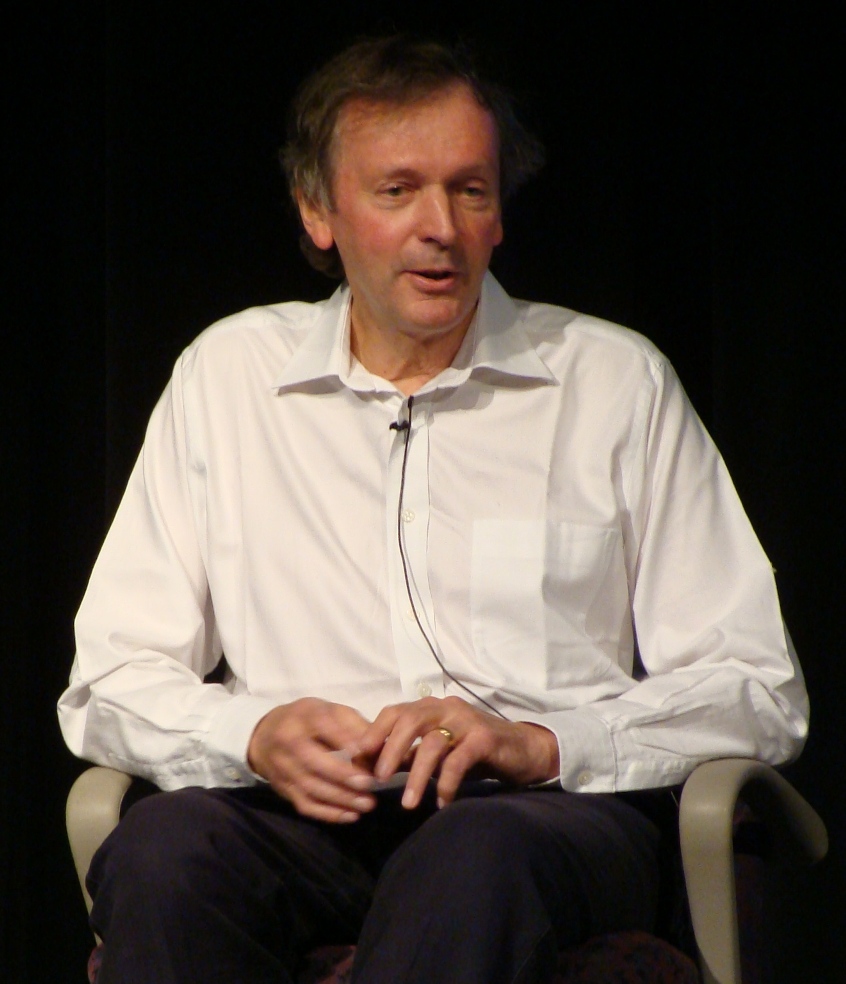
Rupert Sheldrake
Biologist & Author · Independent
Biologist and author known for his hypothesis of morphic resonance and research into phenomena such as telepathy.
Ryota Kanai
CEO & Founder · Araya Inc.
Neuroscientist and entrepreneur studying consciousness in biological and artificial systems. Founded Araya, a Tokyo-based AI company developing artificial consciousness systems.
Sam Parnia
Director of Resuscitation Research · NYU Langone Health
Physician and researcher studying consciousness during cardiac arrest and near-death experiences through the AWARE study.
Sara Walker
Associate Professor of Physics · Arizona State University
Theoretical physicist and astrobiologist studying the origins of life and the physics of living systems. Her work on assembly theory connects information, chemistry, and the emergence of agency.
Simona Ginsburg
Professor (Emerita) · The Open University of Israel
Neuroscientist who, with Eva Jablonka, proposed unlimited associative learning (UAL) as a marker for the evolutionary origin of consciousness, tracing it back to the Cambrian explosion.
Stanislas Dehaene
Professor of Experimental Cognitive Psychology · Collège de France
Cognitive neuroscientist and advocate for Global Neuronal Workspace Theory of consciousness. Studies consciousness, reading, and mathematical cognition.
Stefano Mancuso
Professor of Plant Neurobiology · University of Florence
Plant neurobiologist who studies intelligence and signaling in plants, challenging anthropocentric definitions of consciousness. His research demonstrates that plants exhibit sophisticated problem-solving, memory, and communication.
Steven Laureys
Professor of Neurology · University of Liege
Neurologist and leading expert on disorders of consciousness — coma, vegetative state, and minimally conscious state. Developed clinical tools for detecting covert awareness in brain-injured patients.
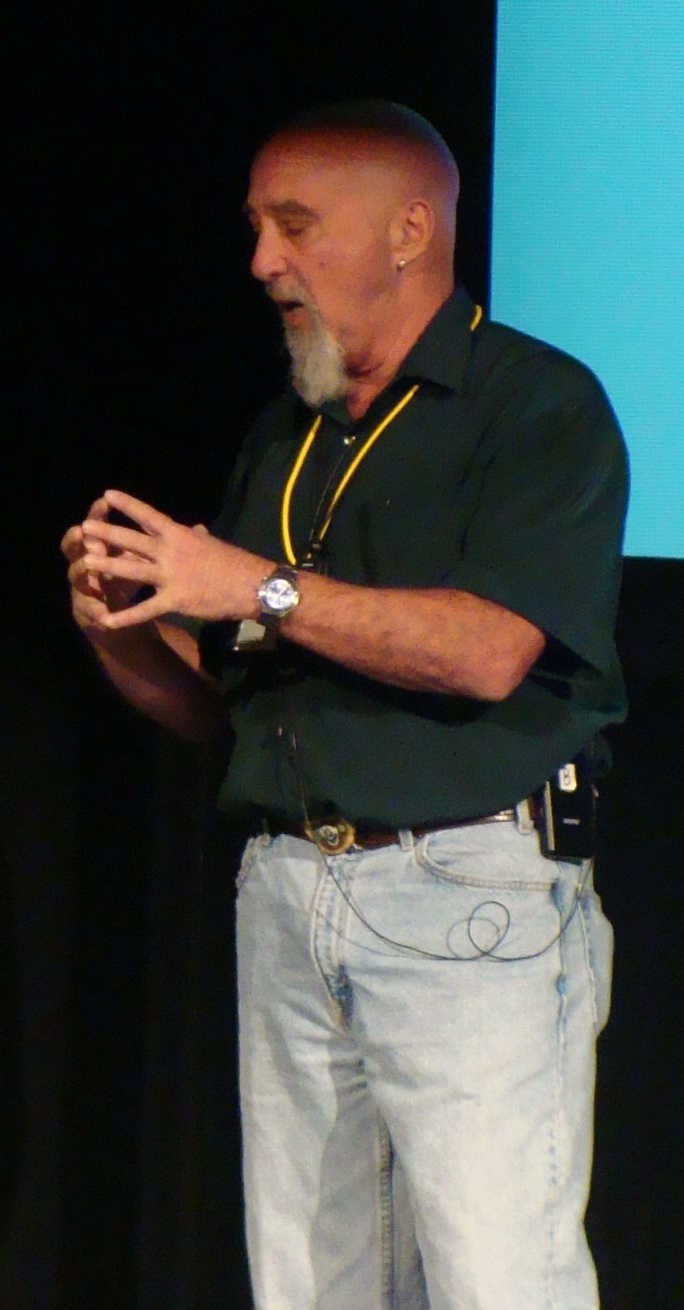
Stuart Hameroff
Professor of Anesthesiology · University of Arizona
Anesthesiologist proposing quantum processes in microtubules as the basis for consciousness (Orchestrated Objective Reduction theory with Roger Penrose).
Susan Blackmore
Visiting Professor · University of Plymouth (Independent)
Psychologist and independent researcher known for her work on memetics, consciousness, and Zen practice. Her "illusory self" perspective integrates cognitive science with contemplative insights about the nature of awareness.
Susan Schneider
Distinguished Scholar · Florida Atlantic University / Library of Congress (former)
Philosopher and AI researcher studying machine consciousness, the hard problem, and the nature of the self. Former NASA Chair in astrobiology.
Susana Martinez-Conde
Professor of Ophthalmology · SUNY Downstate Health Sciences University
Neuroscientist studying visual perception, awareness, and the neuroscience of illusion. Known for research on microsaccades and perceptual illusions.
Thomas Metzinger
Professor of Philosophy · Johannes Gutenberg University Mainz
Philosopher known for his work on the self-model theory of subjectivity (SMT) and embodied cognition. Former co-chair of German Ethics Council AI Working Group.
Thomas Nagel
University Professor Emeritus of Philosophy and Law · New York University
Philosopher who authored the seminal 1974 paper "What Is It Like to Be a Bat?" arguing that subjective experience cannot be reduced to physical processes. His work remains a cornerstone of the consciousness debate.
Tim Bayne
Professor of Philosophy · Monash University
Philosopher of mind researching the unity of consciousness, theories of consciousness, and disorders of consciousness. His work examines how the many aspects of conscious experience are bound together into a unified whole.
Tim Palmer
Royal Society Research Professor · University of Oxford
Physicist who proposed connections between chaotic dynamics, free will, and consciousness through his work on invariant set theory and the geometry of state space.
Tristan Bekinschtein
University Lecturer in Psychology · University of Cambridge
Neuroscientist studying consciousness in brain-injured patients and during sleep, using auditory paradigms to detect covert cognition in vegetative and minimally conscious patients.
Uriah Kriegel
Professor of Philosophy · Rice University
Philosopher who developed the self-representational theory of consciousness, arguing that a mental state is conscious when it represents itself. His work connects phenomenal consciousness to intentionality and self-awareness.
Victor Lamme
Professor of Cognitive Neuroscience · University of Amsterdam
Neuroscientist who developed the recurrent processing theory of visual consciousness, arguing that recurrent (feedback) neural activity is both necessary and sufficient for conscious experience, independent of attention or report.
Wanja Wiese
Postdoctoral Researcher · Ruhr University Bochum
Philosopher working on predictive processing theories of consciousness, the relationship between models of perception and subjective experience, and the philosophy of AI consciousness.
William James
Professor of Psychology and Philosophy (posthumous) · Harvard University
Pioneering American psychologist and philosopher who developed the concept of the stream of consciousness and radical empiricism. Often considered the father of American psychology, his work on consciousness, mystical experience, and pragmatism remains foundational.
Willoughby Britton
Associate Professor of Psychiatry · Brown University
Clinical psychologist studying the adverse effects of meditation (the "dark night" phenomenon). Her Varieties of Contemplative Experience project documents challenging meditation-related experiences.
Wolf Singer
Emeritus Director · Max Planck Institute for Brain Research
Neurophysiologist known for his work on neural synchrony and the binding problem — how the brain integrates distributed neural activity into unified conscious perception through gamma oscillations.
Xerxes Arsiwalla
Research Scientist · Pompeu Fabra University / SPECS Lab
Physicist and computational neuroscientist developing information-theoretic measures of consciousness and integrated information. Works at the interface of physics, neuroscience, and AI.